
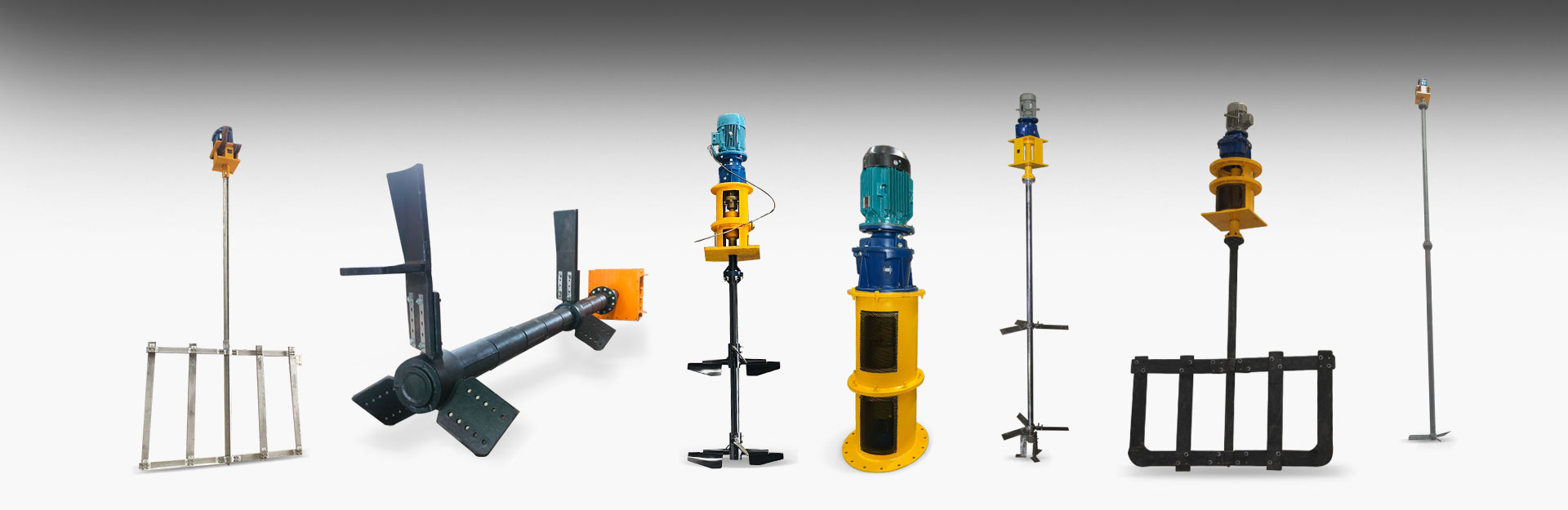
In industrial processing, achieving the desired consistency, texture, or chemical reaction often comes down to selecting the right mixing equipment. While agitators and mixers are both essential tools for combining materials, they differ significantly in design, functionality, and intended application.
This article breaks down the core differences between agitators and mixers, their applications across industries, and how to choose the right solution based on your process needs.
What do Agitators do?
Agitators are mechanical devices used to promote uniformity within a liquid by keeping components in motion. They work by creating low shear forces that stir materials gently, maintaining homogeneity without altering the chemical or physical properties of the substances involved.
Key Functions:
- Maintain suspension of solids in liquids
- Improve heat transfer by circulating fluid
- Prevent phase separation
Industries Using Agitators:
- Water Treatment: For suspending solids and distributing chemicals evenly.
- Chemical Processing: For mixing reactants and maintaining temperature uniformity.
- Food & Beverage: To keep liquids homogenous and prevent ingredient settling.
Types of Agitators:
- Paddle Agitators: Ideal for gentle mixing of low-viscosity fluids.
- Propeller Agitators: Suitable for creating axial or radial flow in tanks.
- Turbine Agitators: Efficient for medium to high-viscosity fluids requiring enhanced mixing.
- Anchor Agitators: Designed to scrape tank walls in high-viscosity processes like syrup or paste production.
What are Mixers Built For?
Mixers combine two or more materials into a uniform blend. They apply significant shear forces to break down particles and ensure complete dispersion, emulsification, or homogenization. Unlike agitators, mixers are designed to alter material structure or consistency.
Common Use Cases:
- Blending powders and liquids
- Creating emulsions or pastes
- Dissolving solids in liquids
Industries Using Mixers:
- Pharmaceuticals: To ensure uniformity in tablet mixtures and creams.
- Cosmetics: For emulsifying lotions and gels.
- Food Manufacturing: To blend dough, batter, sauces, or spice mixes.
Types of Mixers:
- Ribbon Mixers: Ideal for powder blending.
- Planetary Mixers: Best for viscous pastes and thick compounds.
- High-Shear Mixers: Deliver intense mixing action for emulsions.
- Static Mixers: Mix materials without moving parts using flow-induced turbulence.
Agitators vs Mixers
| Feature | Agitators | Mixers |
|---|---|---|
| Primary Purpose | Maintain homogeneity | Create a uniform mixture |
| Shear Intensity | Low | High |
| Design Complexity | Simple (impeller + motor) | Complex (gears, blades, multi-axis) |
| Material Compatibility | Liquids, slurries | Solids, liquids, pastes, gases |
| Common Industries | Water, chemicals, F&B | Pharma, food, cosmetics |
Choose Equipment Based on Process Needs
When selecting between an agitator and a mixer, consider the following:
1. Material Characteristics
- Use agitators for low-viscosity liquids or suspensions.
- Choose mixers for viscous materials, solids, or when structural breakdown is needed.
2. Processing Goals
- If the goal is to keep materials in motion, use an agitator.
- If the goal is to blend, dissolve, or emulsify, go with a mixer.
3. Compliance and Industry Standards
- Ensure equipment meets GMP, FDA, or industry-specific certifications depending on your application.
Maintain for Long-Term Efficiency
Routine maintenance extends equipment life and ensures consistent performance.
Tips:
- Inspect shafts, seals, and blades for wear.
- Lubricate moving parts regularly.
- Clean thoroughly to prevent residue buildup.
- Replace worn or damaged components immediately.
Cost Considerations
Agitators are generally more affordable due to their simple construction. Mixers, while costlier, offer more capabilities for demanding processes. Your choice should align with operational goals, process intensity, and product specifications.
Both agitators and mixers play essential roles in industrial processes, but they serve very different functions. Choosing the right one depends on material properties, process outcomes, and operational goals. With the right equipment and maintenance practices in place, your mixing systems will perform reliably for years to come.
At Verito Engineering, we specialize in manufacturing application-specific agitators for chemical, food, pharmaceutical, and water treatment industries. Our solutions are custom-designed to suit viscosity range, batch size, flow type, and process requirements — all built to comply with global safety and performance standards.
Leave a Reply